Tuesday, 11 October 2016

History of Applied Art

Architecture

The first applied art to be practised in a major way was architecture. From the Egyptian Pyramids, the Ziggurats of Sumer and the Seven Wonders of the Ancient World, to the precisely organized proportions of Greek temples and the enduring engineering quality of Roman viaducts and bridges, architects combine aesthetics with mathematics to design a functional but pleasing structure. Since then, the demands of the modern world have included housing and commercial projects, notably high-rise buildings and skyscrapers. For details, see: Skyscraper Architecture (1850-present).
During this evolution, architectural styles have been influenced by numerous schools and movements, including: Romanesque (c.775-1050), Gothic (c.1150-1280), International Gothic (c.1300-1500), Renaissance (c.1400-1530), Mannerism (c.1530-1600), Baroque (c.1600-1700), Rococo (c.1700-50), Neoclassicism (c.1750-1815), Greek and Gothic Revival (c.1800-1900), Neo-Renaissance and Neo-Romanesque Revival (1849-1880), the Second Empire style (1850-80), Chicago School of architecture (1880-1910), Art Nouveau (c.1895-1915), Early Modernism (1900-25), Continental Avant-Garde (1900-25), Bauhaus Design School (1919-33), Art Deco (1925-40)Totalitarian Architecture (Germany, USSR, 1928-1940), the utopian urban building designs of Le Corbusier (1887-1965), Second Chicago School (1940-70),International Style of modernism (1945-1970), High Tech Corporate Design (1945-2000), Deconstructivism (1980-2000), and Blobitecture (1990-2000).

Commercial Design

Aside from architecture, applied art received its biggest boost from the growth in commerce during the 19th century, following the Industrial Revolution. Suddenly, competitive manufacturers and service providers needed to ensure that their products and services "looked good" as well as functioned properly. This demand for improved aesthetics led to the establishment of numerous design schools and courses, from which a new generation of industrial designers emerged. Later, as the range of products multiplied, and new printing techniques appeared, they were joined by fashion designers, graphic designers and most recently computer graphics designers.


Applied Art

The term "applied art" refers to the application (and resulting product) of artistic design to utilitarian objects in everyday use. Whereas works of fine art have no function other than providing aesthetic or intellectual stimulation to the viewer, works of applied art are usually functional objects which have been "prettified" or creatively designed with both aesthetics and function in mind. Applied art embraces a huge range of products and items, from a teapot or chair, to the walls and roof of a railway station or concert hall, a fountain pen or computer mouse.


What Does Applied Art Include?

For the sake of simplicity, works of applied art comprise two different types: standard machine-made products which have had a particular design applied to them, to make them more attractive and easy-to-use; and individual, aesthetically pleasing but mostly functional, craft products made by artisans or skilled workers. Artistic disciplines that are classified as applied arts, include industrial design, fashion design, interior design, and graphic art and design (including computer graphics), as well as most types of decorative art(eg. furniture, carpets, tapestry, embroidery, batik, jewellery, precious metalwork, pottery, goldsmithing, basketry, mosaic art, and glassware).Illuminated manuscripts and later book illustration are also classified as applied arts. Architecture, too is best viewed as an applied art.


Monday, 10 October 2016


                                    Visual Arts

Vincent van Gogh painting 'The Church at Auvers from 1890 gray church against blue sky


Visual Arts are art forms such as ceramics, drawing, painting, design, photography, video, film making, computer art etc.Many artistic disciplines involve aspects of the visual arts.

                                                  Ceramics

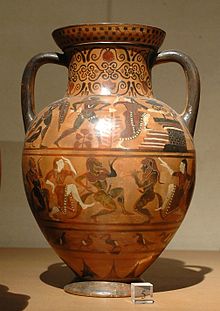
Ceramic art is art made from ceramic materials, which may take forms including art ware, tile, figurines.Ceramic art is one of the arts, particularly one of the visual arts, and of those, it is one of the plastic arts. While some ceramics are considered fine art, some are considered to be decorative, industrial or applied art objects. Ceramics may also be considered artefacts in archaeology.

                                                     Paintings


Mosaic of Battle of Issus Alexander against Darius

Painting taken literally is the practice of applying pigment suspended in a carrier and a binding agent to a surface such as paper, canvas or a wall. However, when used in an artistic sense it means the use of this activity in combination with drawingcomposition and, or, other aesthetic considerations in order to manifest the expressive and conceptual intention of the practitioner. Painting is also used to express spiritual motifs and ideas; sites of this kind of painting range from artwork depicting mythological figures on pottery to The Sistine Chapel to the human body itself.

                                                                  Film Making


Image result for film making set

Film making is the process of making a motion-picture, from an initial conception and research, through scriptwriting, shooting and recording, animation or other special effects, editing, sound and music work and finally distribution to an audience; it refers broadly to the creation of all types of films, embracing documentary, strains of theatre and literature in film, and poetic or experimental practices, and is often used to refer to video-based processes as well.

Computer Art

Image result for animation

Computer art is any in which computers played a role in production or display. Such art can be an image, sound, animation, video, CD-ROM, DVD, video game, website, algorithm, performance or gallery installation. Many traditional disciplines are now integrating digital technologies and, as a result, the lines between traditional works of art and new media works created using computers have been blurred. For instance, an artist may combine traditional painting with algorithmic art and other digital techniques. As a result, defining computer art by its end product can be difficult. Nevertheless, this type of art is beginning to appear in art museum exhibits, though it has yet to prove its legitimacy as a form unto itself and this technology is widely seen in contemporary art more as a tool rather than a form as with painting.